What is a Schirmer Test?
A Schirmer test is a well-established eye assessment used to measure tear production. Tears are essential for keeping the eyes comfortable, healthy, and clear. When the eyes do not produce enough tears, symptoms such as dryness, burning, grittiness, or fluctuating vision can occur.
During the test, a small strip of special paper is gently placed just inside the lower eyelid. Over a few minutes, the paper absorbs tears, allowing the clinician to measure how much moisture your eyes naturally produce.
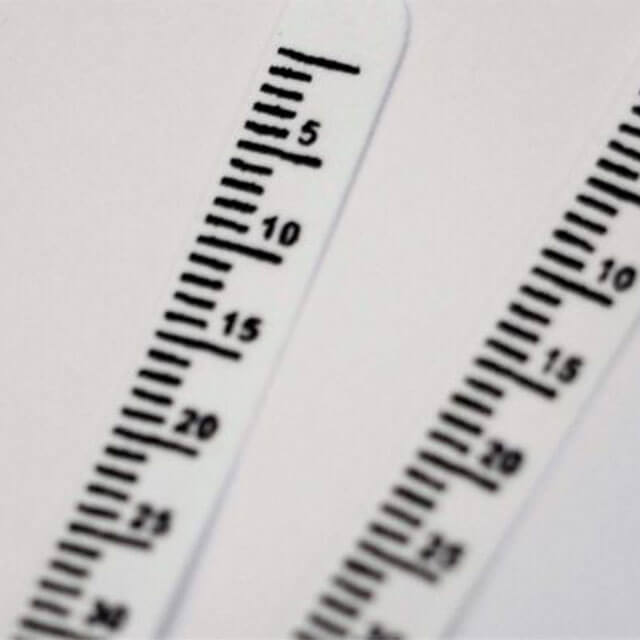
The Schirmer test is commonly used to help diagnose dry eye disease, particularly aqueous-deficient dry eye, where the eye does not make enough watery tears. It can also support the diagnosis of conditions such as Sjögren’s disease.
Results are available immediately, making it a quick and practical test. While reliable, it is usually interpreted alongside other dry eye assessments, as dry eye is often complex and caused by more than one factor.
What Are the Two Types of Schirmer Test?
There are two main types of Schirmer’s test, each measuring tear production in a slightly different way:
Schirmer Test I (without anaesthetic)
Measures both natural tear production and reflex tearing (tears produced in response to irritation).
Schirmer Test II (with anaesthetic)
Uses a numbing eye drop first, so it measures basal (natural) tear production only.
Both tests can help identify aqueous-deficient dry eye. Specialist dry eye clinics may use one or both tests depending on symptoms, medical history, and other findings.
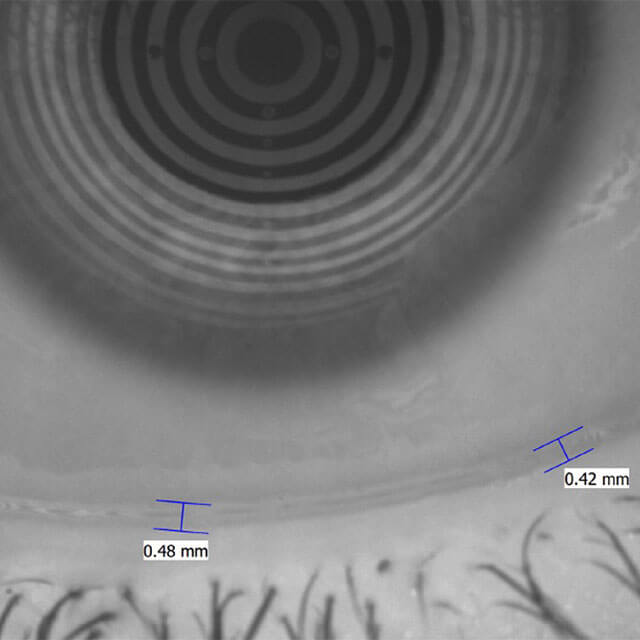
Why is Tear Meniscus Height Assessment the Preferred Method to Assessing Tear Volume?
Tear meniscus height assessment is a non-invasive technique that measures the thin strip of tears that sits along the lower eyelid. This is done using high-resolution imaging and does not touch the eye.
It is often preferred because it is:
- More comfortable than paper-based tests
- Highly repeatable and accurate
- Less likely to trigger reflex tearing
- Better suited for patients with sensitive eyes
This makes it particularly useful for older adults and those with long-standing or complex dry eye conditions.
Who Should Schedule a Tear Volume Assessment or Schirmer Test?
You may benefit from tear volume testing if you experience:
- Persistent dry, sore, or irritated eyes
- Burning or stinging sensations
- Symptoms not improving with standard eye drops
- Blurred or fluctuating vision
Certain patient groups are especially encouraged to book an assessment, including:
- Those with suspected aqueous-deficient dry eye
- People with Sjögren’s disease
- Individuals with autoimmune conditions
- People with chronic dry eye symptoms
Results to Expect From a Schirmer Test
Schirmer test results are measured in millimetres (mm) based on how much of the paper strip becomes wet in five minutes.
Lower results suggest that the eyes may not be producing enough tears to stay comfortable. While this can sound worrying, it is actually helpful information, as it allows specialists to tailor treatment precisely to your needs.
Your clinician will always explain results clearly and in context with other tests, ensuring you understand what they mean for your eye health.
As a general guide:
10 mm or more
Normal tear production
5–10 mm
Mild to moderate tear deficiency
Less than 5 mm
Significant tear deficiency
Results to Expect From Tear Volume Assessment
What is a Normal Score?
Tear meniscus height is usually measured in millimetres using imaging technology.
This method provides a clear, objective measure without discomfort and is often easier for patients to tolerate than traditional testing.
Typically Around 0.2–0.4 mm
A normal tear meniscus height
<0.2 mm
Lower measurements may indicate reduced tear volume
Supporting Treatments Following a Schirmer Test and Tear Film Assessment
If testing shows low tear production or an unstable tear film, a personalised treatment plan can be created. This may include prescription eye drops, tear-stimulating treatments, eyelid therapies, or advanced dry eye procedures (IPL, LLLT, punctal plugs).
At Dry Eye Centre, assessments focus on identifying the root cause of your symptoms, ensuring treatment is targeted and effective rather than trial-and-error.